
Transforming your backyard into something you’re genuinely proud of is one of the most rewarding home investments you can make. But “massive renovation” means something very specific when it comes to your wallet. We’re talking about projects that routinely run $30,000, $60,000, even $100,000 or more once you factor in hardscaping, drainage, water features, surface work, and driveway upgrades. Without a clear budget built before anyone breaks ground, costs don’t just creep; they sprint. This guide walks you through a step-by-step framework for budgeting large-scale outdoor renovations intelligently, so you can move forward with confidence instead of sticker shock.
Start With a Full Property Assessment Before Setting Any Numbers
The single biggest budgeting mistake homeowners make is skipping a thorough property walk-through and jumping straight to Pinterest boards and contractor calls. Before you can budget accurately, you need to know exactly what you’re working with and what’s quietly failing beneath the surface.
Walk your entire property with a notepad or phone and document every hardscape surface, structure, drainage point, and system you can see. Look specifically for:
- Cracking or heaving surfaces on patios, walkways, and driveways
- Water pooling near the house foundation, garden beds, or low spots in the yard
- Deteriorating wood on decks, pergolas, or retaining walls
- Blocked or missing downspout extensions that push water toward structures
- Surface discoloration or pitting that signals material failure
Pay particular attention to your deck drainage systems. This is one of the most chronically underbudgeted line items in backyard renovations because the problem is hidden water infiltrates beneath deck boards, saturates joists, and causes structural rot that often isn’t visible until it’s already expensive. If your deck sits close to the ground or over a living space, factor drainage management into your budget from day one.
The same early-assessment logic applies to paved surfaces. A properly applied sealcoating treatment on asphalt or concrete can extend the life of a surface by five to ten years, but only if it’s applied to a surface that’s been correctly prepped and isn’t already structurally compromised. Knowing the condition of your surfaces in advance tells you whether you’re budgeting for maintenance or full replacement.
Prioritize Projects by ROI and Structural Urgency

Once you’ve assessed the full property, resist the urge to do everything at once. A renovation budget is most effective when it’s built around clear priorities, not excitement. The right sequencing framework is: structural repairs first, functional upgrades second, aesthetic improvements third.
Structural issues, such as failing retaining walls, compromised drainage, and rotting deck framing, should never be deferred to save money in the short term. They only get more expensive. Functional upgrades like grading, surface resurfacing, and driveway work are the second tier: they don’t threaten the home, but they affect daily use and long-term property value. Aesthetic work, landscaping, lighting, and outdoor kitchens are the third tier and should only be funded after the first two are accounted for.
One area where homeowners consistently underestimate both cost and importance is surface preparation. Before any new coating, finish, or overlay can be applied, the old material has to come off cleanly. For large concrete surfaces, brick, or metal structures with heavy rust or old paint buildup, working with a sandblasting company is often the most efficient and thorough approach. Sandblasting strips surfaces down to bare substrate far faster than grinding or chemical stripping, and it ensures new finishes bond properly, which directly affects how long the work lasts and how soon you’ll need to redo it.
When prioritizing, also think honestly about which tasks are genuinely DIY-appropriate. Equipment rentals can make certain jobs significantly more affordable, such as skid steers for grading, plate compactors for base preparation, and aerators for lawn restoration. But renting equipment you don’t know how to operate safely or efficiently can cost more in wasted time and mistakes than hiring a professional would have. Use rentals strategically for tasks with a low margin for error, not as a blanket cost-cutting tool.
Actionable tip: Before finalizing your priority list, invest $300-$500 in a structural inspection of your deck, retaining walls, and any below-grade drainage systems. A single afternoon with a qualified inspector can prevent you from building a beautiful renovation on top of a failing foundation.
Get Multiple Quotes and Know What You’re Actually Comparing

Getting quotes is not the same as understanding quotes. Most homeowners collect three bids, pick the middle one, and call it due diligence. That’s a starting point, not a strategy.
When soliciting quotes, give every contractor the same written scope of work. This is critical if each contractor is bidding based on their own interpretation of the project; you’re not comparing the same job. Your written scope should specify the square footage of each surface, the materials you’re open to, your timeline, and any access constraints on the property.
For paving and hardscape work, local asphalt services typically offer better pricing, faster scheduling, and more accountability than large regional or national operators. A local crew has lower mobilization costs, knows your region’s soil conditions and climate behavior, and has a reputation to protect in the community. When you call a local asphalt services company for a quote, ask specifically how they handle base preparation. This is where corners are most commonly cut, and it’s what determines whether a paved surface lasts eight years or twenty-five.
For structural and decorative stonework, a skilled masonry contractor will provide quotes that should clearly separate materials from labor. If a masonry contractor hands you a single lump-sum number with no breakdown, ask for an itemized version before proceeding. You want to see the cost of materials (concrete block, stone, mortar, rebar), the cost of labor by task, any subcontractor fees, and the warranty terms on workmanship. Vague quotes protect the contractor, not you.
Actionable tip: Build a quote comparison spreadsheet with standardized rows for each trade: materials cost, labor cost, timeline, warranty, payment terms, and any exclusions. When you lay three quotes side by side in this format, the real differences become immediately visible.
Build Your Budget Around Trade-Specific Cost Ranges

One of the most practical things you can do before meeting with contractors is educate yourself on realistic cost ranges for each trade involved in your renovation. This prevents both sticker shock and dangerous underbudgeting.
Water management is one of the most underinvested categories in backyard renovations, and it’s also one of the most consequential. Installing seamless gutters as part of your renovation or replacing sectional gutters that leak at the joints is a high-value, relatively affordable upgrade that protects every other improvement you’re making. Water that isn’t properly channeled away from your home will erode grading, undermine hardscape bases, and infiltrate foundations. Seamless gutters, which are fabricated on-site in continuous runs without joints, eliminate the most common failure points and typically run $8 to $15 per linear foot installed, depending on material and region.
If your property includes a pool, pool resurfacing service costs deserve their own line item and their own contingency buffer. Pool resurfacing prices vary significantly based on the current surface condition, the finish material you choose (plaster, aggregate, or tile), and pool size. A standard plaster resurface on a medium-sized pool might run $5,000-$8,000; a full aggregate or pebble finish on a large pool can reach $15,000-$20,000 or more. A reputable pool resurfacing service will always recommend draining and thoroughly inspecting the shell before committing to a price, because hidden cracks or structural issues found mid-project are the most common source of cost overruns.
When building your budget by trade, use these general contingency guidelines:
- Drainage and grading: 15 to 20% contingency
- Hardscape (patios, walkways, walls): 15% contingency
- Pool and water features: 20 to 25% contingency
- Structural repairs: 25% contingency
Also, build a separate line item for hidden costs that don’t appear in any contractor quote: permit fees, utility marking and protection, debris removal, and temporary site access modifications.
Plan Your Driveway and Entryway Work as Part of the Overall Budget
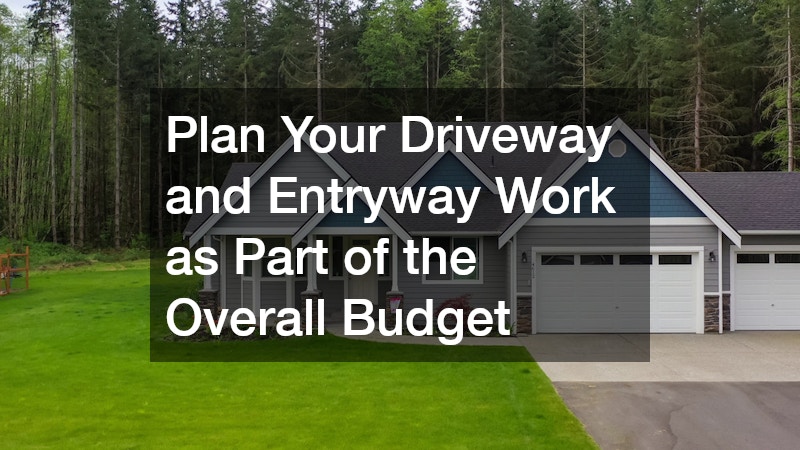
If your renovation plan touches any part of your yard, now is the right time to address the driveway and entryway, not because they’re glamorous, but because coordinating this work with your existing project saves significant money on equipment mobilization and site prep.
Homeowners on larger properties or those looking for a cost-effective, durable surface should look seriously at gravel driveways as either a permanent solution or a smart interim choice. Properly installed gravel driveways with a compacted base and good edge containment can last decades with minimal maintenance and typically cost a fraction of asphalt or concrete. They also allow water infiltration, which actually benefits your overall drainage design.
For those who want a more finished look without the full cost of concrete, chip seal paving offers a compelling middle ground. Chip seal paving involves applying a layer of hot liquid asphalt followed by a layer of crushed stone aggregate, which is then compacted and rolled. It delivers a textured, durable surface at roughly 50-70% of the cost of full asphalt paving, and it performs particularly well in climates with significant freeze-thaw cycles. When chip seal paving is scheduled alongside your backyard hardscape work, you often share grading equipment, material delivery, and labor, which can reduce your total mobilization costs by 10-20%.
Actionable tip: When requesting quotes for backyard hardscape work, always ask the contractor whether they also handle driveway surfaces. If they do, ask for a combined project discount. If they don’t, ask if they can recommend a subcontractor partner. Combined scheduling still saves on equipment and crew costs even when two different companies are involved.
Phase Your Renovation to Stay Cash-Flow Positive All Year
No matter how thorough your budget is, trying to execute a massive backyard renovation all at once is a financial risk that most homeowners don’t need to take. Phasing your project isn’t a compromise; it’s a strategy.
A well-sequenced phase plan for a large renovation typically looks like this:
- Phase 1 (Foundation): Drainage, grading, retaining walls, and any structural deck or patio framing repairs
- Phase 2 (Hardscape): Paved surfaces, walkways, pool decking, and entryway work
- Phase 3 (Features): Pool resurfacing, outdoor structure installation, built-in features
- Phase 4 (Finishes): Landscaping, lighting, furniture, and decorative elements
This sequence exists because each phase creates the conditions that the next phase depends on. You cannot install a beautiful patio on unstable, improperly graded ground. You should not invest in landscaping until water management is confirmed to be working.
Phasing also gives you a natural leverage point for managing cash flow. Contractor payment schedules are typically tied to project milestones, so a phased plan spreads your financial exposure over months rather than concentrating it in one overwhelming draw. You can also align phase timing with seasonal pricing bids solicited in late fall or winter for spring execution, which are frequently 10-15% lower than peak-season quotes, because contractors are looking to fill their calendars.
Actionable tip: Build your phase plan in a simple calendar view with estimated costs per phase, target start and end dates, and a running total. Leave Phase 4 deliberately flexible in scope. If earlier phases come in over budget, you have a clear place to trim without cutting anything structural.
Financing Options That Don’t Derail Your Long-Term Financial Health
Even with careful budgeting, a large backyard renovation often requires financing for at least a portion of the cost. Understanding your options and their real costs keeps you from making a decision you’ll regret long after the project is finished.
The four main financing paths are:
- Cash: No interest, no risk, full control. The best option if you have reserves that won’t compromise your emergency fund.
- Home Equity Line of Credit (HELOC): Lower interest rates than personal loans, but your home is collateral. Best suited for large-scale, value-add projects.
- Personal loan: Fixed terms, no collateral, typically higher rates. Works for mid-size projects with clear timelines.
- Contractor financing: Convenient but often the most expensive over time. Always calculate the APR before agreeing.
A HELOC makes the most financial sense when the renovation is clearly going to increase your home’s appraised value, which structural repairs, quality hardscaping, and functional upgrades typically do. It makes less sense for purely cosmetic work where the value-add is speculative. Whatever financing you choose, maintain at least 10% of your total project cost in liquid reserves to cover change orders, unexpected discoveries, and contractor overruns. Change orders are not unusual in large renovations; being cash-liquid when they happen protects you from making desperate decisions under pressure.
Budgeting a large backyard renovation isn’t glamorous work, but it’s the work that determines whether your project becomes a success story or a cautionary tale. Start with an honest assessment of what you have, build your priorities around structural reality rather than aesthetic preference, get detailed and comparable quotes, and phase your work in a sequence that protects both your investment and your cash flow. The homeowners who end up happiest with their renovations aren’t necessarily the ones who spent the most; they’re the ones who planned the most carefully. Start your property walk-through this week, build your priority tier list, and approach every contractor conversation with the clarity and confidence that a solid budget gives you.